Your Smoothie Is a Lie: The Case for Letting Tropical Fruit Actually Taste Like Itself
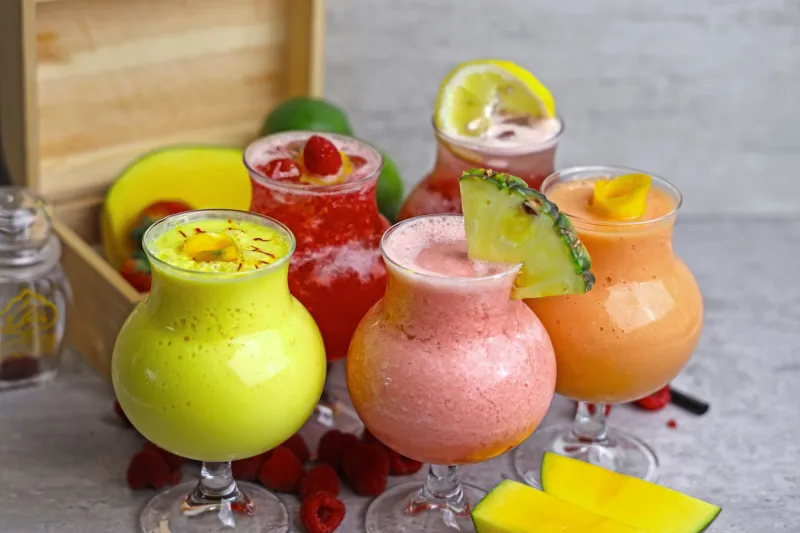
Let's be honest with each other for a minute. That green smoothie you've been drinking every morning? You don't actually like it. You like the idea of it — the virtuous hum of the blender, the smug little Instagram story, the feeling that you've mainlined health before 8 a.m. But the drink itself tastes like a lawn clipping smoothie with a banana sent in to negotiate a hostage situation.
Here at Green Skin Mango, we've decided the reckoning is overdue.
The Kale-ification of Paradise
American smoothie culture has a flattening problem. Walk into any juice bar from Austin to Portland and you'll find the same basic formula: kale, spinach, spirulina, almond milk, banana, maybe a scoop of something with a name like 'Vital Greens Max.' The tropical fruit — if it appears at all — is a garnish, a mango cube floating on top like a life raft.
This is a crime against geography. Tropical fruits are the loudest, weirdest, most opinionated ingredients on the planet. Soursop tastes like a strawberry and a pineapple had a baby raised on custard. Guava smells like a perfume counter in the best way. Green mango is sour enough to make your knees buckle. And yet we've trained ourselves to drown all of that personality under bitter greens and chalky powders until everything tastes like the same beige-adjacent health sludge.
The result? A nation of drinkers who think they like smoothies but have never actually tasted a fruit.
What We Lose When Everything Tastes Like Spirulina
Flavor aside — and flavor is a lot to set aside — the superfood-smoothie industrial complex erases the cultural stories baked into these fruits. Soursop isn't just a texture novelty; it's a Saturday afternoon in a Caribbean grandmother's backyard. Green mango isn't a sourness delivery vehicle; it's a street snack in Bangkok, a salad in the Philippines, a point of contention at family gatherings.
When we blend everything into interchangeable 'wellness mush,' we lose the plot. A smoothie should taste like a place. If your smoothie tastes like a supplement aisle, you're doing it wrong.
The Radical Proposal: Fewer Ingredients, Better Fruit
Here's the counterintuitive move: make your smoothie simpler. Let the fruit do the work. Three recipes to get you started:
The Guava Situation — 2 ripe guavas (or ½ cup guava paste if that's what your store has), juice of 1 lime, 1 cup cold water, a handful of ice. Blend. That's it. It's pink, it's floral, it tastes like a vacation you didn't have to fly for.
Green Mango Agua Fresca-Style — 1 shredded green mango, juice of 2 limes, 2 tablespoons sugar or honey, ½ teaspoon chili powder, 2 cups cold water. Blend, strain if you're fancy, serve over ice. Sour, spicy, and more awake than you'll ever be at 7 a.m.
Soursop Simple — 1 cup soursop pulp (frozen works great, check the Latin freezer aisle), 1 cup coconut milk, a pinch of salt, ice. Custardy, tropical, and zero powder required.
Notice what's missing: kale, spirulina, protein powder, and regret.
A Shopper's Guide Without a Shoppers' Budget
Tropical fruit can get expensive fast, so here's the budget playbook:
- Shop the Latin and Asian markets first. Guava, soursop pulp, and green mangoes cost half what they do at the fancy grocery, and the produce is usually better.
- Buy frozen pulp. Soursop and passion fruit pulp in the freezer aisle is often cheaper and better than fresh — and it's already deseeded, which your blender will thank you for.
- Buy the ugly fruit. Bruised mangoes and soft guavas get discounted and blend exactly the same.
- Seasonal = cheaper. Mangoes drop in price in late spring and summer. Plan accordingly.
The bottom line: your blender isn't the problem. The beige wellness mush you keep putting in it is. Give tropical fruit the lead role it deserves, and breakfast gets a whole lot more interesting.